
Planning your trip
Is Cambodia safe for tourists?
An honest answer from a Cambodian team: what is genuinely safe, what to watch for in the cities, the scams, the roads, and the one rule about the countryside.

We are asked this more than any other question, usually by people whose picture of Cambodia comes from the 1970s. So: yes, Cambodia is a safe country to visit, and millions of people do every year without trouble. Violent crime against tourists is rare.
That is not the same as nothing to think about. Here is what we tell our own guests, including the parts a brochure leaves out.
Want to see this for yourself?
Tell us your dates and what you want to see. A local planner will send you a written itinerary and a price, normally within one working day.
What is actually common
Bag snatching in the cities
This is the real risk, and it is mostly Phnom Penh, on riverside streets in the evening. Someone on a motorbike takes a bag or a phone from a hand or a shoulder as they pass. It is over in a second, and people are sometimes pulled off their feet.
- Carry your bag on the side away from the road, or across your body under an arm.
- Do not walk along the street looking at your phone, and do not hold it out of a tuk-tuk.
- Take a car rather than walking back late at night. It costs a few dollars.
- If it happens, let go. A bag is replaceable.
Scams
None of these are dangerous, but they cost money and temper:
- The closed attraction. A driver tells you the palace or the museum is shut today and offers somewhere else, where he earns a commission. Check at the gate yourself.
- The milk powder for the baby. A woman with a child asks for formula rather than money; the shop sells it at several times the price and splits the difference. Give to a registered charity instead.
- Unmetered fares. Agree the price before you get in, or use an app such as Grab or PassApp.
- The broken note. Torn or heavily marked US dollars are often refused. Check what you are handed at a bank or a change counter.
Money itself
Cambodia uses US dollars alongside riel, and change under a dollar usually comes in riel. ATMs dispense dollars and charge a fee of a few dollars per withdrawal. Carry small notes: a $50 in a village shop is a problem.
The roads
Traffic is the genuine hazard in Cambodia, as it is across the region. Lanes are treated loosely, motorbikes come the other way along the edge, and lighting outside towns is poor.
- Do not hire a motorbike unless you ride well and are insured. Most travel insurance does not cover you without the right licence.
- Wear the helmet if you are a passenger.
- Crossing the road: walk at a steady, predictable pace and let the traffic flow around you. Do not stop halfway or run.
- On long journeys, a private car with a driver is safer and not much more expensive than a shared minibus.
The one countryside rule
Cambodia still has unexploded ordnance and landmines in parts of the north and west, left from the war. The temples, the towns and every route a visitor normally takes are cleared and safe. The rule is simple and it is absolute: stay on marked paths and do not walk into uncleared fields or forest, and never touch a piece of metal you find in the ground. If you see a red skull-and-crossbones sign, that area is not cleared.
Health and water
- Do not drink the tap water. Bottled or filtered water only; ice in restaurants and cafés is factory made and fine.
- Street food is generally safe where it is busy and cooked in front of you. Our guide to Khmer food and drink has more on eating well.
- Mosquitoes carry dengue, for which there is no tablet. Repellent in the evening matters more than anything else.
- Heat catches more visitors than any illness. Drink more than you think you need and rest in the middle of the day.
- Get travel insurance that covers medical evacuation. Serious cases are flown to Bangkok, and that is expensive without cover.
Solo travellers, women and families
Cambodia is a common stop for solo travellers, including women travelling alone, and most report feeling comfortable. The usual sense applies: keep to lit streets at night, watch your drink, and take a car home rather than walking. Cambodians are fond of children and families are made very welcome; the main constraints with small children are the heat and the distances, not safety.
Dressing modestly, particularly at temples and outside the tourist areas, draws less attention and is appreciated. Our customs and etiquette guide explains what that means in practice.
Paperwork and the law
Carry a copy of your passport and keep the original at the hotel. Drug offences carry severe penalties. Photographing military sites is not allowed. Entry rules, including the e-visa and the arrival card, are in our guide to visas and entry.
How we handle it
On our tours you are with a licensed Khmer guide and a driver who know the roads and the towns, which removes most of what is on this page: the taxi haggling, the fake closures, the unlit night drives. You can see how our trips are run on our Cambodia tours page, or ask us anything before you book. If you have a specific worry, ask it plainly and we will answer plainly.
Tours for this trip
Every tour is private and can be changed to fit your dates.
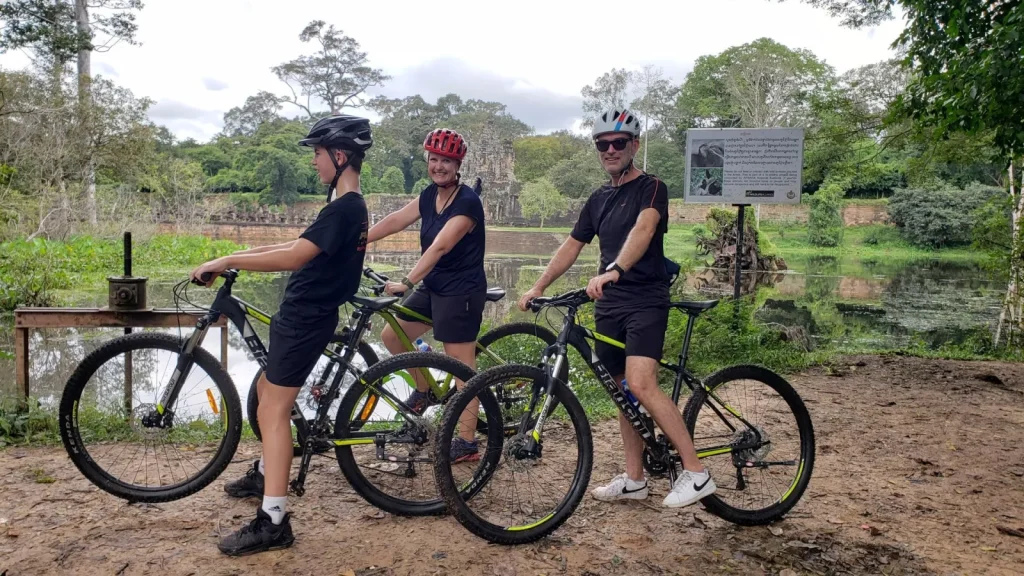
Angkor Jungle Biking Adventure Private Cycling Tour
Get off the beaten path and experience the ancient temples of Angkor in a more active and immersive way with this private cycling tour.
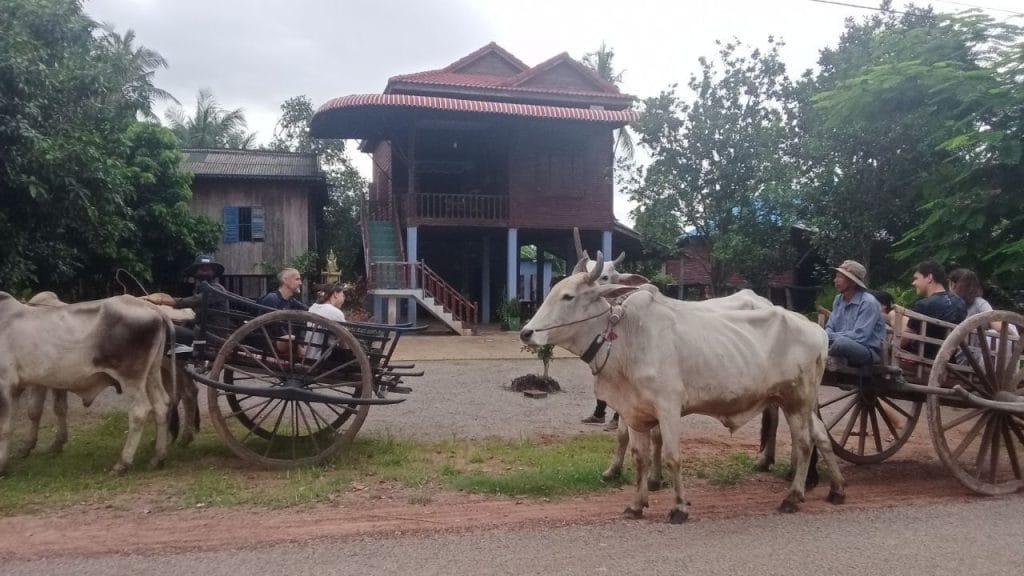
Cambodia Village Homestay: Authentic Local Experience near Siem Reap
Leave the busy streets of Siem Reap behind and spend a night with a local family in the countryside.
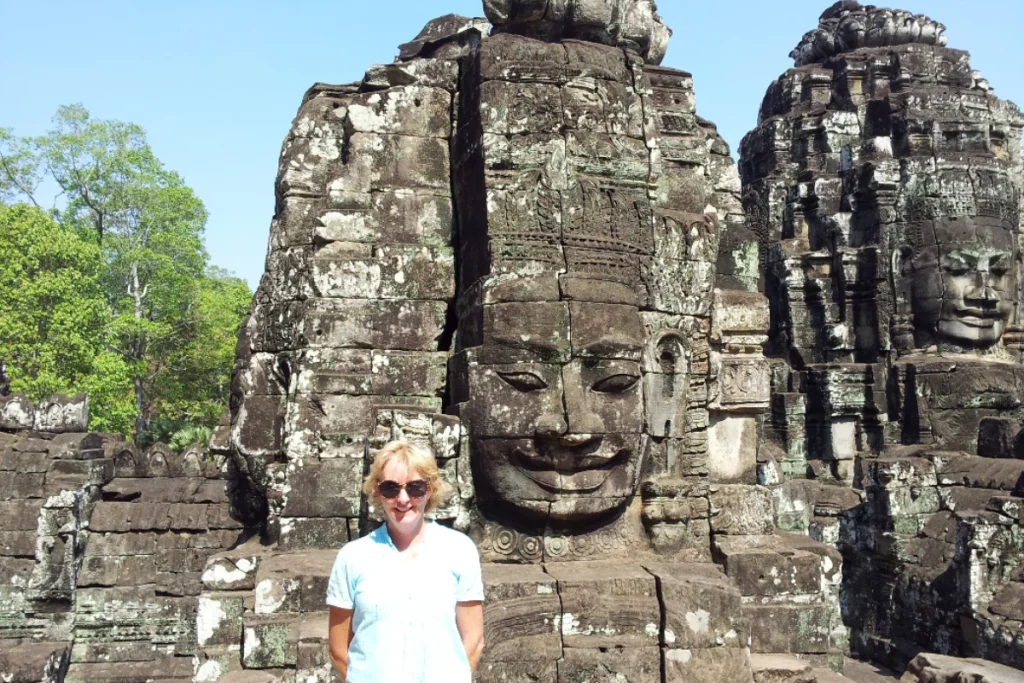
See all our tours
More from the travel blog
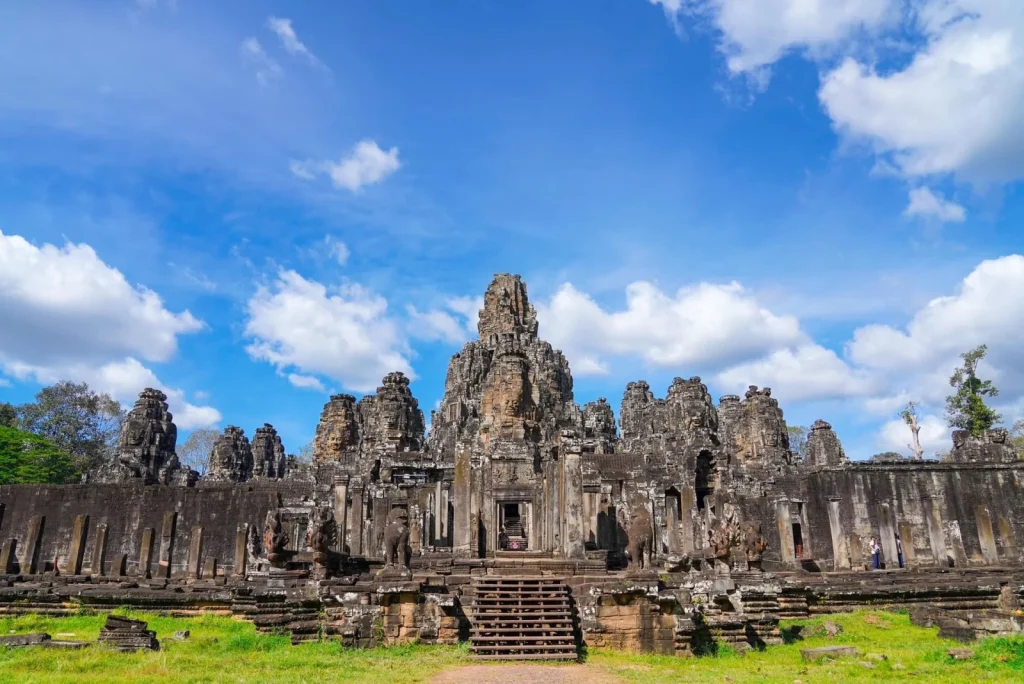
Angkor Wat tickets: passes, prices and how to buy them
Where to buy the Angkor pass, which one to choose, what it does and does not cover, and the rules that catch visitors out…

How many days do you need at Angkor Wat?
One day covers the famous temples, three days lets you see Angkor properly. Here is what fits into one, two, three and five days,…
Cambodia festivals and events calendar: a month-by-month guide
Khmer New Year, the Water Festival, the equinox sunrise at Angkor Wat and the Angkor Half Marathon: what is on each month, and how…
Planning a trip around this?
Tell us your dates and what you want to see. A local planner will send you a written itinerary and a price, normally within one working day.